
How Much Does an Outdoor Boiler Cost in 2026?
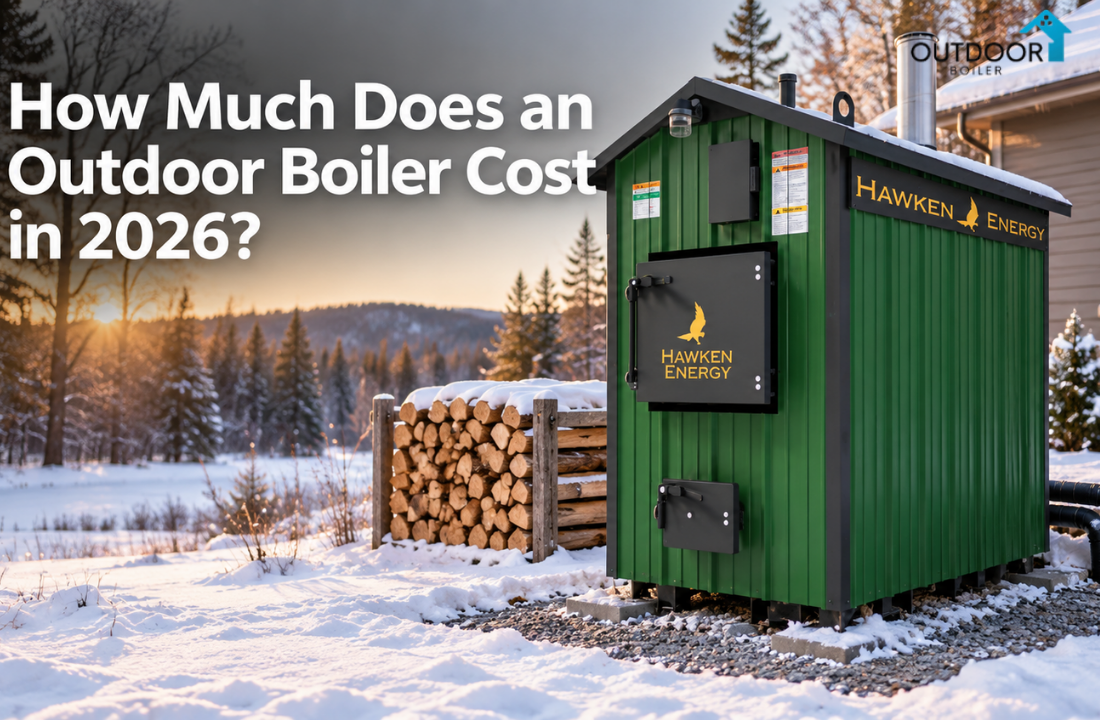
If you are pricing an outdoor boiler in 2026, an installed budget is usually about $8,000 to $20,000, with many homeowners landing near $12,000. Your actual cost can be lower or higher depending on the boiler type, heating capacity, site preparation, labor, and local requirements.
What is an outdoor boiler?
An outdoor boiler, also called an outdoor hydronic heater or outdoor water stove, burns cordwood, pellets, chips, or another approved fuel to heat water. That hot water travels through insulated underground lines into a home, workshop, barn, or another building. It can warm radiators, baseboard heaters, radiant floors, and sometimes domestic hot water.
Unlike a furnace that sends heated air through ductwork, an outdoor boiler uses water as the heat-carrying medium. This can work well for properties with several buildings or existing hydronic heating equipment. The installation may include a concrete base, underground piping, pumps, controls, electrical work, and indoor connections.
Typical outdoor boiler prices in 2026
HomeAdvisor reports a 2026 professional installation range of $8,000 to $20,000, with an average of approximately $12,000. That figure is useful for early planning, but it is not a guaranteed market price. Contractors quote differently because labor rates, shipping costs, fuel availability, building layouts, and regional regulations vary.
The boiler unit may account for roughly $6,000 to $12,000 for a standard wood-burning model. Gasification models commonly cost about $7,000 to $20,000, with some high-capacity systems reaching $25,000. These are broad planning ranges rather than a substitute for a local quote.
A small installation with short underground runs may cost less than the typical range. A larger system serving several buildings can cost considerably more. Used equipment may look inexpensive, but its condition, emissions status, and installation requirements can change the total quickly.
Main costs beyond the boiler
Installation labor alone may cost about $1,500 to $4,500, according to HomeAdvisor. A contractor may also charge for insulated underground lines and connection materials. Those materials can add approximately $300 to $1,000, although a long distance between the boiler and house can raise the total.
Site work is another variable. You may need a concrete pad, drainage improvements, trenching, frost protection, or removal of an old heating unit. Electrical service may be needed for pumps and controls. If the indoor heating system is not compatible with hot water, you may need a heat exchanger.
Permit fees and inspections belong in the budget as well. Some communities require setbacks from property lines, restrictions on chimney height, or specific installation plans. Ask your local building department and air quality agency before purchasing equipment. This helps prevent an expensive location or compliance problem later.
Standard boilers compared with gasification boilers
Standard outdoor boilers usually have a lower purchase price, but they may burn more wood to produce the same useful heat. They can also produce more smoke when operated incorrectly or when wet fuel is used.
Gasification boilers generally cost more at the beginning. They burn wood gases at high temperatures, which can improve efficiency and reduce visible smoke when operated as designed. The extra cost may make sense for someone with reliable access to seasoned firewood who expects to use the boiler for many years.
When comparing models, look beyond the sticker price. Check the output, firebox size, required wood moisture, warranty terms, replacement parts, service availability, and emissions certification. A unit that is too large may operate inefficiently, while one that is too small may struggle during cold weather.
Ongoing operating and maintenance costs
Fuel is usually the largest recurring expense. HomeAdvisor estimates annual firewood costs of roughly $450 to $3,200, depending on usage and local wood prices. Cutting your own wood can reduce cash expenses, but it still requires equipment, storage space, labor, and time. Wood should be properly seasoned for the appliance. Wet wood can reduce performance and increase smoke and creosote.
Plan for routine cleaning, ash removal, water treatment, pump inspection, and occasional repairs. You may eventually need to replace seals, sensors, valves, or other components. Keeping a backup heat source is sensible during very cold weather.
Can an outdoor boiler save money?
It can, but savings depend on what the boiler replaces and how you obtain fuel. A household that currently buys expensive heating oil or propane may save money if it has affordable firewood. A household that purchases all its wood at high prices may see a much longer payback period.
To estimate your own result, compare the complete installed cost with your current annual heating bill. Include fuel, electricity, maintenance, and your time. Cutting, splitting, stacking, and loading wood is a substantial commitment, even when the fuel seems inexpensive.
Important safety and legal considerations
The U.S. Environmental Protection Agency explains that outdoor hydronic heaters can be subject to state and local rules covering emissions, minimum distances from neighbors, and stack heights. The agency advises consumers to check with their state or local air quality office and consult its database of certified wood heaters.
Use a qualified installer for the boiler, water lines, electrical connections, and integration with your existing heating system. Incorrect connections can damage equipment or create fire, pressure, freezing, or carbon monoxide risks. Follow the manufacturer’s instructions and arrange regular inspections.
Final cost perspective
For 2026 planning, I would start with a working budget of $12,000, then allow room for a total project range of $8,000 to $20,000 or more. Request at least two detailed quotes that separate the boiler, labor, trenching, piping, electrical work, permits, taxes, and startup service. This makes proposals easier to compare.
If you would like help reviewing your options or discussing your heating needs, contact us to learn more. A site assessment turns a broad price range into a realistic project budget.
Related resources
Helpful reads from our site and trusted sources to continue exploring this topic.
250+ Quality Checks: How NoBroker Interiors Ensures Quality at Every Stage
For homeowners, getting a beautiful interior is only part of the equation. What matters…
Read the guide →
Why Hanex Countertops Could Be the Right Choice for Your Home
When choosing surfaces for your kitchen or bathroom, we know how overwhelming the options…
Read the guide →outdoor boiler in 2026
Trusted external resource related to this article.
Visit source ↗